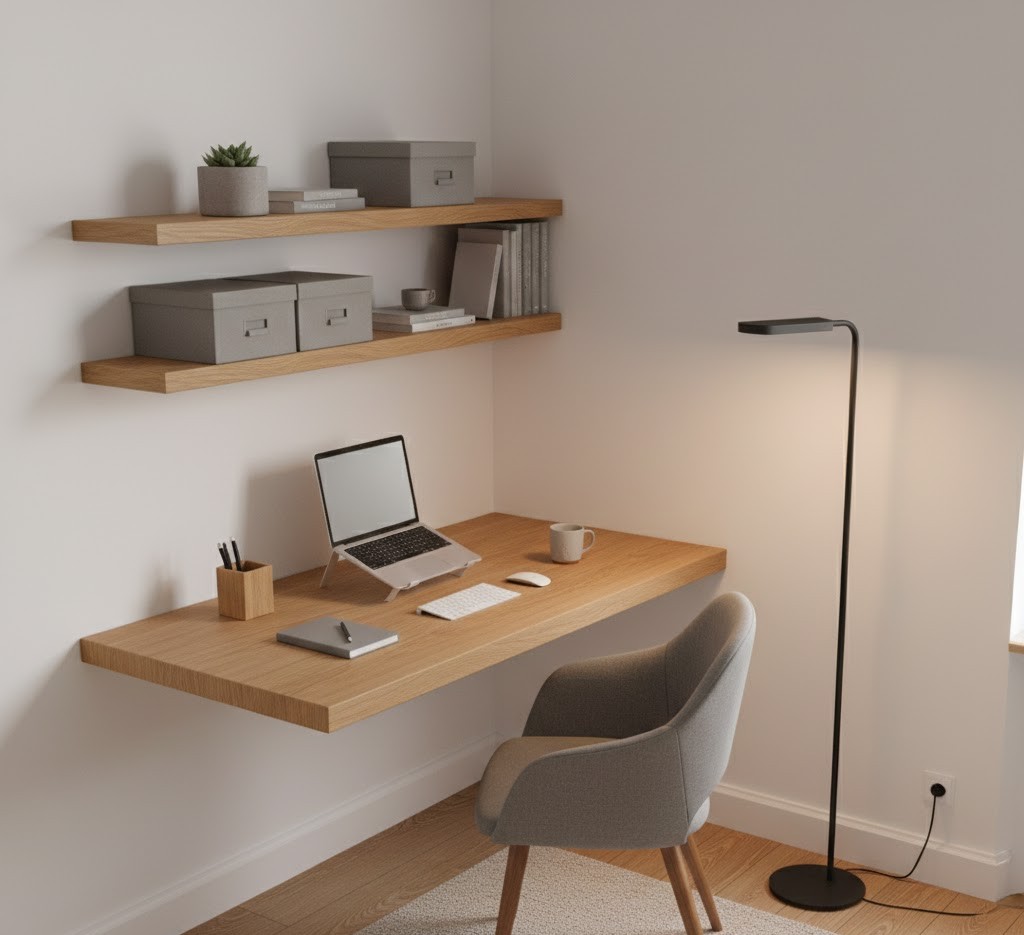
Understanding Minimal Workspace Design
Minimal workspace design transcends mere aesthetic preference; it represents a holistic approach to creating environments that support both mental clarity and professional efficiency. The fundamental principle centers on eliminating visual noise while maximizing functional utility.

When designing a minimalist workspace, every element must serve a purpose. This philosophy encourages thoughtful selection of furniture, accessories, and organizational tools. Rather than accumulating numerous items, focus on choosing pieces that offer multiple functions or contribute meaningfully to your workflow.
Color Psychology in Workspace Design
Color selection significantly influences mood and productivity. Neutral palettes create calming environments that reduce distraction and eye fatigue. Soft slate greys provide subtle depth without overwhelming the senses, while crisp whites enhance the perception of space and cleanliness.
Accent colors should be used sparingly but strategically. Warm wood tones add organic warmth to otherwise sterile environments, creating visual interest without compromising the minimalist aesthetic. These natural materials also introduce texture variation that prevents monotony.
Furniture Selection and Placement
Choosing appropriate furniture involves balancing ergonomic requirements with visual harmony. Desks should offer sufficient surface area for your specific tasks while maintaining clean lines and minimal visual weight. Height-adjustable options accommodate various work styles and promote healthy posture.

Chair selection warrants particular attention, as comfort directly impacts productivity and long-term health. Look for models that provide proper lumbar support while aligning with your design aesthetic. The goal is seamless integration of function and form.
Lighting Strategies for Productivity
Effective lighting design combines natural and artificial sources to create balanced illumination throughout the day. Position your workspace to maximize natural light exposure, which enhances mood and reduces reliance on artificial sources during daylight hours.
Supplement natural light with layered artificial lighting. Task lights provide focused illumination for detailed work, while ambient fixtures maintain overall brightness. LED options offer energy efficiency and color temperature control, allowing you to adjust lighting to match your circadian rhythms.
Spatial Planning and Flow
Thoughtful spatial planning ensures that movement through your workspace feels natural and unencumbered. Consider the zones within your office: primary work area, storage space, and transition areas. Each zone should connect logically, minimizing unnecessary movement between frequently used items.
Maintain adequate clearance around furniture to prevent feelings of confinement. Even in compact spaces, strategic placement can create the illusion of openness. Vertical storage solutions help maximize floor space while keeping essentials accessible.